Pages

Showing posts with label craft. Show all posts

Monday, July 18, 2016

Trouble

According to Les Edgerton, author of Hooked, "All stories are about one thing: trouble. What does trouble create? The hope that we can do something to get out of it."

I saw this quote at Writer Unboxed, and I've been thinking about it ever since. Mostly because I was having some trouble with character motivation. Just that one little quote actually lent some new perspective to my dilemma, after which, I found more helpful quotes:

"What can I do about it anyway? Every squeak counts, if only in self-respect."

"The hour of consciousness doesn't mean cognition only, but understanding..."

"The search for justice is timeless, and courage isn't lack of fear but persisting despite our fear."

"There is just this, and it is everything."

Saturday night I had to do an errand after work, which was about the last thing I wanted to do. But as I drove past Sherman Marsh I smiled because the errand wasn't going to take too long, and it was a lovely, warm summer evening. The last of the sun was all golden, the wind was blowing through the car from the open windows, and my dog was happy to be doing something different. And I thought, yes, there is just this, and it is everything.


What's inspiring you this week? 


Monday, March 7, 2016

Transitions

I don't know about you, but I often get hung up on transitions. Transitions help the reader progress from one significant idea or event to the next. In most cases I have more than one of these in every chapter, which means I have to move my characters and their dialogue along smoothly from one idea/event, to the next one.

My current WIP is a supernatural murder mystery, which of course revolves around solving the murder. There is a lot of dialogue in which characters discuss the state of affairs, ask questions, and offer answers. The trick here is me knowing what information my characters have to either elicit, or give up, and then string it all together in a pleasing fashion. In my first drafts, I often find a lot of repetition, ie, someone saying the same thing in a different way, or places where the dialogue doesn't move naturally to the next idea.

The same thing happens with events. I know certain things need to happen in a particular chapter. Inspector Beck has to go here or there to find evidence and question people. But between those events I need some sort of transitional phrase to let the reader know Beck has left City Hall and is now going over the Tip Top Cab Company for example. Sure, I can just say Beck left City Hall and went over to the cab company, but how did he get there? Fly? Walk? Take a bus? Why is he going there? If I haven't already said so I'll need to explain, and if any length of time passes between one event and the next, I'll have to somehow show that as well.

So. That's what's giving me pause right now, and making me think how to get better. Do you have trouble with transitions? Got any secrets for tackling them?

You can also find me over at Unicorn Bell this week talking about one of my favorite grammar books, Sin and Syntax by Constance Hale. Have a fabulous week.

ps The Blackbirds have come back :)


Wednesday, December 30, 2015

The Subconscious Mind


The Subconscious Mind


I’ve been thinking about this lately, especially as it pertains to writing. I don’t know about you but I often write subconsciously, ie, write what I think is ordinary/average but which turns out to have deeper meaning or significance.

For example, when I began my current WIP, it was November, and I was struggling with the first chapter. I knew I wanted it to be from my Inspector’s POV and that it had to start with the discovery of the body. Then there was the surrounding description: the place, the time, the weather, all those little things that frame the important words regarding what’s really happening. Since it was fall where I live, I gave my book the same setting. A bit cold, leaves falling, rainy weather, damp, etc. It’s always easier to write in the season you’re in, I think. It was only later I realized I had chosen an excellent time of year to begin my story. The murder was only going to take so long solve, at which point my story would be done. I imagined this to be no more than two months, bringing me to the end of the year. Since the story also revolves around the relationship between the estranged sisters, it made perfect sense to have the resolution occur at the end of the year so that the new year could ring in…well, something new. Birth and death. Death and Birth. 
I think my subconscious mind somehow knew to set the story at that particular time of the year.

Could it have been chance? Coincidence? Possibly. But I don’t think so. For the simple reason that it’s happened too many times. I suddenly realize that something I’ve written is—not to crow too loudly—a little bit brilliant, and it wasn’t planned. Sometimes I notice it right away, but sometimes, as in the above instance, I don’t realize it until later.

I’ll share one other curious incident that happened recently. As I was researching Tarot Cards I came across the amazing Visconti-Scorfza deck which I mentioned on my lastpost. I also posted a picture of the Ten of Swords from the deck, which I find extraordinary beautiful. So of course I used the card in my story, right? Only afterwards do I go and look up the meaning of the card, which is uncannily appropriate for what’s going on:

"The idea of completion and a group of people, associated with the meaning of the number ten, take on rather negative connotations in the suit of Swords. The Querant should beware of getting involved in a group of people whose problems will cause trouble for the Querant, though this may not be possible if they are members of one's own family or people to whom one has a commitment. However, as the number ten also signifies the conclusion of something, and the beginning of a new phase, this card can indicate that problems, conflict and pain are coming to an end and that the Querant is now experiencing the worst point of a crisis, after which the situation will improve. This is sometimes described as a card of ruin and disaster, but also offers hope for a brighter future."


Was it chance I chose the Ten of Swords? Coincidence? Sure, it could have been. But I think my subconscious mind pulled this information out of the vault of memories that's buried beneath all the immediate stuff I need to pull out of my hat. I think my subconscious mind knows all the stuff I’ve forgotten and sometimes I tap into it.

According to Brian Tracy* “Your unconscious memory is virtually perfect. It is your conscious recall that is suspect.”

What do you think?


* Brian Tracy is the CEO of a big company specializing in development training for individuals and companies. I just happened to come across the quote while googling the subconscious mind. Figured I’d give him credit. It’s an interesting quote. 


Friday, December 4, 2015

Building Better Characters

So. I'm on a roll here with my current project and am still going to be mostly absent this month, but while I was working so hard on my story and characters I came across something I thought I'd share. It's another character building exercise (because I love building better characters) that helps us delve into the deeper emotions of our characters. 

"Start by picking any moment in your story when your protagonist (or any other character) feels something strongly. What is that feeling. Write it down, Now, pause at that moment. As what else does this character feel simultaneously? Write that down. Next ask, what else does my character feel at this moment. This third level emotion is our focus." 

In my current tale there are three estranged sisters who have brought together by their mother's murder. One of the sisters, the oldest, is Alice so I did the exercise for her first. At the beginning of the story Alice is devastated (first level emotion) by the news of her mother’s murder. Not only does she love her mother as her mother but also as a friend. But what else does Alice feel simultaneously? Anger (second level emotion) at whoever did it. How could they? Why? What’s wrong with people? She hopes they rot in hell forever.  Next ask, what else does Alice feel at this moment? Afraid. (third level emotion) Her mother has been the one who has led her through society, provided her with a home and a lifestyle she not only wouldn’t be able to keep up on her salary, but would be afraid to even try to keep up on her own. Without her mother, she feels lost and afraid and alone again, like the kid she used to be and couldn’t wait not to be so she wouldn’t feel like this.
 
Examine this third level emotion: What is it like to feel this feeling?  Alice hoped never to feel like this again; she thought growing up would mean she wouldn’t. It’s even worse now because there isn’t even an adult to rely on. What might (or should) this character be feeling instead?  What would a finer human being feel? She would feel and exhibit the proper amount of grief for the proper amount of time and then get on with her life and everything would go back to being fine and dammit, what was wrong with her? Why did she always feel like she was faking being grown up? Regardless, why is this feeling the right and only one for this character right now? Because she needs to be down so she can learn to rely on her sisters who will help her be strong, for herself and others. Finally, what does having this third level-feeling tell this character about herself? What does it say about her condition? That she has some shite to deal with and get through. Has this character sunk or risen?  Sunk. Has this character grown or regressed?  Let’s call it a set back. What’s the truth in it?  She’s probably not the only person to feel this way when one of their parents dies. How is this feeling beautifully universal or painfully unique?  Is feeling this feeling to dwell in heaven or burn in hell? It’s hellish. She can’t wait to move on, but it’s going to take some work and she’s going to have to...change.

I did this exercise for all three sisters and it was interesting to see both the similarity in their answers, and the differences. It also helped me realize that Alice isn't as grown up as she may appear to others (or as grown up as I thought she was!), which helps me know how she reacts to situations, and clues me into her inner feelings so I can write her deeper.

Anyway. That's what I've been doing; writing my little ass off and trying to build better characters, and, a better book. 

I may not be back this month to post until the Cephalopod Coffeehouse on the 25th - unless I have something interesting to share - but I will be back for First Impression at the beginning of January so if you have a first page you'd like critiqued (your NaNo project maybe?) check out my sidebar (right) for all the FAQs and happy writing!


12/26/15 Update: I discovered where I found the bit on Third Level Emotions. Donald Maass. I should've known.


Friday, October 23, 2015

My love/hate relationship with revisions

I'm going to take a wild guess and say I'm not alone in this.

Part of me loves revisions because there are all these places where I've left notes for myself in my manuscript to 'fix this' or 'bw' (better word) or 'bt' (better transition) or whatever, not to mention all the notes my CP's have left me. These are all opportunities for me to make my manuscript a thousand times better than it was, which is why I love revisions. Because they're going to turn my manuscript from good to great. I know this. I've seen it happen.

But.

Then I get to one of those places* where revising is suddenly a chore. For me it's usually when I've failed to adequately convey the necessary information. Like the scene I'm working on now where my mc has finally found something she's been looking for and is about to get a bunch of answers. In my first version, the dialogue didn't follow. It felt forced.

I know what information needs to be conveyed. The trouble I'm having is revising this so that the conversation she has with the other person seems completely natural. So that each question seems to naturally follow the answer that came before AND convey all that necessary information.

I am making progress (check my progress bar for NO REST and you'll see it's up to 63% complete) but damn sometimes it's slow and hard.

So. That's how it is with me, today.

How's it going with you?


* For me, this is usually somewhere after the first act. I tend to write a fairly decent part one of three (my strength). Part two tends to get loose or fall apart entirely (my weakness) but if I can get through that then part three tries to pull it all together and make an ending, preferably a satisfying one. It isn't pretty, but it is a first draft.

Monday, January 12, 2015

Inspiration


This picture inspired me. Made me think about disasters, something my number one brother and I share a love for - on screen that is! And while the flooding wasn't quite so bad in my WIP, I have a few more disasters up my sleeve to torment my characters with. Like this:


My characters are about to leave this place in search of answers.

It's been slow going. I've been working on this since November and am just now closing in on 20K. But. I think my chapters are more coherent and that there will be less to revise later, less major stuff. We'll see...

So. What's inspiring you?


Wednesday, September 17, 2014

The Order of Things and Fatal Flaws

So.  A short while back I told you about how I'm working way too much out of necessity, getting home late, no time off, blah blah blah. I also said I 'd give you an update on what I'm really working on, you know, the important stuff: the writing I squeeze in whenever I'm not too tired or mind dead (this is when all you can handle is re-runs of Criminal Minds or whatever show you're currently following, like The Killing, which could be a post all itself...).

Anyway. I am currently making slow progress on an old project I haven't quite given up on: GRIMOIRE. Some of you might remember me talking about it. I queried it and got a lot of requests for partials and fulls but ultimately no takers. Why? I'd read the manuscript a million times and every time I came away thinking, damn, that's a great story! Why didn't agents like it enough to take it on?

And I finally figured out why. I found the fatal flaw. It was the order of things. Especially the order in which information was presented through dialogue. Either the conversation didn't track quite right or a question wasn't asked when it should've been. Fixing this flaw has involved a whole lot of cutting and pasting, rearranging dialogue, adjusting events...basically revising - again. But in the end, I hope I'll have something I can be truly proud to send off, or, perhaps even publish myself.

Meanwhile, ponder this question I heard on The Big Jab, a sports radio station my son listens to:

Would you rather keep your thumbs and go bald or keep your hair and lose your thumbs?

PS As of this writing, Dianne Salerni and I have two spots left for October's First Impressions. Interested in having your first page critiqued by two authors? Check out my sidebar for the details. 


Saturday, September 6, 2014

Guest post with author Julie Musil


I am thrilled today to turn my blog over to author Julie Musil, who offers Writing Lessons Learned from her latest read. I'm a big fan of Julie and I love her lessons. I hope you will, too.


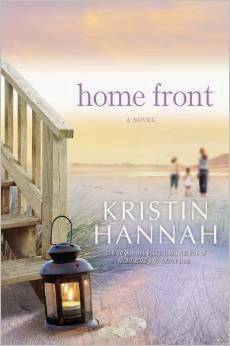
Writing Lessons Learned from HOME FRONT

http://www.amazon.com/Home-Front-Kristin-Hannah/dp/B00A7K2EHU/ref=tmm_hrd_title_0?ie=UTF8&qid=1407799222&sr=8-1


One of my favorite unintentional things to do while reading a great book is to take away writing lessons. I love jotting down helpful techniques used by some of my favorite authors, such as Kristin Hannah.

Here’s a brief blurb of Kristin Hannah’s novel, Home Front, which I recently finished.

Like many couples, Michael and Jolene Zarkades have to face the pressures of everyday life--children, careers, bills, chores--even as their twelve-year marriage is falling apart. Then an unexpected deployment sends Jolene deep into harm’s way and leaves defense attorney Michael at home, unaccustomed to being a single parent to their two girls. As a mother, it agonizes Jolene to leave her family, but as a soldier she has always understood the true meaning of duty. In her letters home, she paints a rose-colored version of her life on the front lines, shielding her family from the truth. But war will change Jolene in ways that none of them could’ve foreseen. When tragedy strikes, Michael must face his darkest fear and fight a battle of his own--for everything that matters to his family.

Here are some writing lessons I learned from this gut-wrenching book (Alert! If you plan to read this book, and don’t want to know any plot points, read no further!):

•   Role Reversal--the main character, Jolene, is a female helicopter pilot in the reserves who is sent off to war. I normally think of men in this position, which is just me stereotyping. The female warrior angle was really cool. The end of the book included an interview with a real female helicopter pilot, which was intriguing.
•   Unhappy Goodbye--leaving for war must be bad enough. But leaving for war while your marriage is crumbling? Saying goodbye to a tween daughter with attitude? These sad puzzle pieces made Jolene’s goodbye even harder. How can you repair a marriage and guide a young daughter when you’re thousands of miles away?
•   Natural Conflict--Jolene is Army Strong and believes in her mission. Her hubby is a talented lawyer with strong beliefs of his own, and doesn’t support her mission. This natural conflict added layers to the plot. If the husband had been supportive, a heap of conflict would’ve been missing.
•   Character Flip Flop--at the beginning of the story, Jolene is a can-do, turn-that-frown-upside-down kind of person. After a tragic injury, she changes completely. The internal dialog is what carries this massive change. The survivor’s guilt, the frustration, and the depression all add to this believable character shift. There are some things in life you just can’t fake your way through.
•   Make Matters Worse--just when the situation was bad for the main character, the author made things worse. Going off to war is bad enough, but then add a fractured marriage. A fractured marriage is bad enough, but then add traumatic injuries. Injuries are bad enough, but then add deaths of friends. Kristin Hannah is brilliant at piling it on her poor characters.

What do you think of these writing lessons? Have you used any yourself? Have your read Home Front, or any other Kristin Hannah novels? Any new writing lessons you’ve learned lately? Please share!

Julie Musil writes from her rural home in Southern California, where she lives with her husband and three sons. She’s an obsessive reader who loves stories that grab the heart and won’t let go. Her YA novels The Summer of Crossing Lines and The Boy Who Loved Fire are available now. For more information, or to stop by and say Hi, visit Julie on her blog, on twitter, and on Facebook.

http://www.amazon.com/Summer-Crossing-Lines-Julie-Musil-ebook/dp/B00LTZF1FY/ref=sr_1_1?ie=UTF8&qid=1407799727&sr=8-1&keywords=The+Summer+of+Crossing+Lines


http://www.amazon.com/Boy-Who-Loved-Fire-ebook/dp/B00H9MY16Q/ref=sr_1_2?s=digital-text&ie=UTF8&qid=1407800443&sr=1-2


Monday, June 9, 2014

Agree or disagree?

"Don’t just finish writing a first draft and call it a day." 

Jim in a bag.

Having spoken of revisions before, you can all guess I agree with the above statement. And for that very reason I am taking another break in order to finish revising PEACE & FORGIVENESS. I will be back on June 27th for the Cephalopod Coffee House Book of the Month review and resume my (semi) normal blogging schedule. In the meantime Dianne and I are still looking for submissions for July's First Impressions (see sidebar for FAQs). I also have an availability in July for an author interview. I'll promote your book with pics, blurb, links, and an interview. If you're interested, click on contact me at the top; I'd love to promote someone and hey, why not you?


Friday, November 22, 2013

It's okay to cheat...sometimes...

No, I'm not talking about cheating on your significant other (that's never okay), or cheating on tests, or even cheating on your taxes. I''m talking about cheating on your manuscript.

C'mon, you know you've done it before, turned to some shiny new toy after the luster wore off the old one. I know I have. But I've come to the conclusion that it's okay, in fact, it might even be a good thing. Why? Because it's writing. It's practice. And the more we practice the better we get. It's inevitable. Right? Anyway. I'm not going to feel guilty about it anymore. I'm just going to write.

What lessons have you learned lately?

yep, another one of the son's pics...

ps come back on Monday and say hi to Julie Flanders who will be stopping by to chat - and have a great weekend. Do something fun!

pps Dianne Salerni and I still have three slots open for First Impressions in December and we'd love to see your page :)

Monday, November 18, 2013

So...revisions

Has anyone else substantially revised a work you thought was finished? That's what I've been doing, and I have to tell you it isn't easy. Not only did I write an almost entirely new part two, but I also had to completely re-arrange the last third of the book, add all the necessary transitions, adjust for time and the new route my characters are taking, AND write a new ending. All in the hopes of making this story better than just good. Sometimes I ask myself why I spend so much time on one story, one set of characters? But I don't have a good answer, unless it's that I believe in them - for now.

How do you feel about revisions?


Oh, and for anyone who's interested, my new header is courtesy of my son, picture taker extraordinaire. He took the lighthouse, too :)

Friday, July 26, 2013

Lazy words

On Monday I was telling you about my over-used words - like, look, just, and back. Maybe you use the same words too much or maybe you have different words but either way, I've realized that the reason they get used a lot is because I'm lazy.  The reason I know this is that during my search for those lazy words I discovered that I could often come up with a better, more accurate word if I thought about it for a minute. 

For example when I used the word 'like' did I mean enjoy or similar to? Could some of those looks turn into gapes or stares or examinations? The answer was often yes.

Which sadly confirms my realization; I'm being lazy by using those words and, more importantly, I'm forgetting one of the very important lessons:

Use definite, concrete, specific language.

It takes a little longer, but I have a feeling that what I'm doing now, this search and replace, is far more time consuming. What are your lazy words? Have you conquered any? I can see this as an ongoing issue until it becomes habit to find the proper word.

Thoughts? Opinions? 

Friday, June 14, 2013

So...what now?

So. I've finished another novel - # 6 in case anyone is counting - and I've learned a few things. The biggest is that it's okay to have a messy first draft. My obsession with each chapter being perfect resulted in none of my early works being completed. I can't even tell you how many half finished novels I have sitting on my computer, the characters languishing, waiting for the day their lives can continue (and yes, that IS how I think of them. Always waiting for me to write their lives so they can have one). But once I let go of that obsession I finally completed my first manuscript. I won't say it's gotten a lot easier but I have learned how to move past the parts I'm not wild about, make some notes about how to change it, and get on with the story. I also found a new way to detour around the dreaded writer's block thanks to somebody in the bloggy world (thank you for that suggestion!) which is to write the end. Doing that helped me figure out exactly which direction to head in rather than taking a stab at it. And the last thing I'll share is the knowledge that finishing doesn't make it done. I knew as soon as I began writing that there would be revisions to follow and that those revisions (how many? As many as it takes) would be what really completes the book, turn it into the kick-ass scifi I envisioned when I started.

So. What now? Now I get to take a break and play with the SNTs (shiny new toys) I found or go back to an older unfinished work or maybe I won't write at all and just read. In a month's time I'll begin round two of the polishing process, after which I'll send it out to be read. Then we'll see if my story is as kick-ass as I think it is...


Now. What are you doing? Where are you in this crazy process we call writing? Taking a well-earned break? Furiously revising? Just found a shiny new toy? Do tell.

Friday, February 22, 2013

Plot as you go

This seems to be my fallback position. I pants my way through a few chapter then start to write a chapter by chapter outline. Pretty soon I start making notes for future chapters, as well as add revision notes for what I've already written, usually things I thought of or my CPs suggested and often in purple. For example, after writing chapter one, this was my original summary of it:

Ch. 1 – p. 1 On the day before she leaves for the Academy, Camille’s Grandfather takes her to meet the peddler from whom she receives the watch.


Now that same entry looks like this:

Ch. 1 – p. 1 On the day before she leaves for the Academy, Camille’s Grandfather takes her to meet the peddler from whom she receives the watch.   This would be a good place to insert a bit of back story. Start with Cam’s worry over leaving Grandfather alone, even tho he has friends, thinking about his warnings about CGE, which she doesn’t believe, putting it down to fear that he’ll lose her, too, like he did her mother.
     Don’t get me wrong. I love my grandfather, more than anyone. More than the father I never knew but heard so much about, and more than my mother who thought nothing of leaving me. But he is old fashioned like a lot of old people. Always thinking things were better when he was a kid, that ‘the worlds have devolved and all that was good is slowly leaking away.’ I think he’s being a little dramatic, or maybe just remembering wrong. “You forget, Cammi, I’ve been around a long time,” Which is true; he has. He was around when Cedar made first contact (although he always says they made contact first).  I try to tell him it’s change and inevitable but he just shakes his head.
      "Then why are you letting me go?” I asked him the last time he went on about CGE.
     “Because I don’t want to lose you,” he answered.
    “You can’t lose me, Grandfather,” I said, hugging, him. “No matter what.”


As for the watch Cam receives, I imagine it looks something like this:


Friday, February 8, 2013

the way we write

If you read enough blogs and books about writing you will quickly discover that the way we write varies greatly from person to person. Some people are pantsters and can run with a single idea. Others are plotters and have everything laid out nice and neat and organized before they ever write a word of the story. Most of us probably fall somewhere between the two extremes.

Way back in the day I started off as a total pantster, just sat down and wrote whatever came to mind. But it wasn't long before I started making notes about my characters, tried to figure out who they were. Then came chapter notes, little blurbs about what would would happen, but still, mostly pantsting. Then, one day, I finally bit the bullet and outlined an entire novel, extensively interviewed my main characters and delved into theme and plot. This worked out rather well, and I thought, damn, that's slick! I was so happy thinking I'd found the perfect way to write a book. Until I tried it again with the next one.

Fail.

This led to me starting completely over with a brand new toy and a brand new way of figuring out how it works, which, for the record, I haven't. But one of these days I am going to find the method that works every time, the perfect combo between outlining and pantsting. My holy grail. I swear sometimes I catch glimpses of it.


Wednesday, January 23, 2013

critical factors

I was reading my Writer's Digest Magazine last night, and once again came across a superb article about why some novels become successful and others don't. Culprit number one, according to Donald Maass, is timid voices. "A snappy premise and meaty plot can hook us and keep us reading but cannot by themselves work that magic. It takes something extra: voice." Further, "voice in a novel is not the author's thoughts or vocabulary but the sum total of what her characters observe, think, feel and express in their own unique ways."

The fix is easy. Write your characters with strong voices. Let them speak in their own words and tell the story.

(Which is exactly what I've been doing with my latest wip! I know, great minds think alike, right? Me and Don? We are so on the same page when it comes to characters. It's scary.)

Anyway. Moving on. Culprit number two, according to Maass, is untested characters. If they don't do anything then what was the point? How compelling is it to read about a character who doesn't react? The best characters act bravely even though they're scared, jump to defend their principles and rise to face their deepest fears. They come out the other side, changed different, and so do we for reading about them.

But the last and best is culprit number three (Overly Interior or Exterior stories), which really hit home: "Certain story patterns are pretty much guaranteed to lead to fiction of underwhelming force," especially novels heavy with "delay, suffering, and being stuck." Fiction of underwhelming force is, of course, the last thing we want. The way to rectify this, Maass says, is to give interior stories "more dramatic outward events; by the same token, dramatic outward events need to create a more devastating interior impact."

Yeah. I had to underline that last part. Brilliant, right? Especially the devastating part.

And if that doesn't get you all fired up to write something then I'll give you a last gem I found, a question to ponder. Ask yourself, what's the biggest thing your protagonist could possibly do, but can't? By the end of the story, have her do it.

Hmm. I think I might.


Friday, January 18, 2013

killing them softly

One fun thing about writing - and you can call me a sick little monkey if you want - is that you can let your evil side out without fear of retribution. Now, I know some of you are just plain nice and probably don't even have an evil side but I am not one of you, just to be clear. I have lots of bad thoughts and wish horrible things upon those I deem deserving (a prime example being people who hurt children or animals - they all deserve death - see how evil I am?). Sometimes I take my evil out when I play games and become a thief or an assassin, like when I was playing Skyrim's predecessor, Oblivion. At the end I was the leader of both guilds and I didn't get there by playing nice. Other times I just take my general frustration with horrible people out when I kill bandits and Imperial soldiers in Skyrim (trust me, they both deserve it).

But when it comes to writing, my true evil comes out because I sometimes kill completely innocent people who never did any wrong. Like Sven Lindstrom. I hung him last week. And he won't be the first.

How about you, where do you let your evil out?

Friday, January 11, 2013

7 tips for great sentences

I was looking over a grammar book I have - Pinckert's Practical Grammar* - and I came across these 7 tips for building a good sentence.

1. Keep sentences brief. "You should write the shortest possible sentences using the shortest possible words, in the shortest possible paragraphs, not because people are dimwits or because they're busy - they're not that dim or that busy - but because force comes from the elimination of the inessential."

2. Vary your sentence patterns. No one wants to read paragraph after paragraph of fifteen to twenty word sentences (the average written sentence). Mix it up.

3. Wake the reader up. "Use questions, exclamations, asides, commands, interruptions, and inversions." For example, instead of saying, To begin with, Marley was dead. Say, Marley was dead, to begin with.

4. Be brave and strong. Avoid the passive voice. Throw out the adjectives and adverbs. Make the nouns precise, the verbs forceful. Put statements in positive rather than negative form.

5. Combine sentences. This seems to contract #1 but by combining sentences often makes reading easier and smoother, especially when the sentences have a common subject. For example, when talking about the old library down the street: The library sits on the corner of Elm Street. It is an old stately building. The paint is peeling. Combined: The library on the corner of Elm Street is an old stately building in need of new paint. 

6. Don't distract attention. "If you're writing seriously, avoid devices and expressions that call attention to themselves." In other words, be careful not to be too clever.

7. Don't like what you wrote. Don't love your words so much you can't bear to part with them. As writers we must be ruthless; as pretty as our words might be, sometimes they have to go.

#2 was one of the first I learned, thanks to one of my favorite teachers, Mr. Wallace. In fact, I think I still have some old stories marked in his red pen, advising me to vary my sentence structure.

What grammar books do you keep close?


* Pinckert, Robert C., Pinckert's Practical Grammar, Writer's Digest Books, 1986.

Friday, November 16, 2012

Eureka!

This month from Writer's Digest Magazine:

"You must think up those plot events that will affect your character enough for them to react with genuine change." According to W. Somerset Maugham, that's the secret to writing. And while I happen to believe there are many secrets to writing, this one illustrates why I love some books. It's because the character changes in some way, usually for the better. I guess I like to think (hope) that we're all trying to evolve and so I root for those characters who are trying.

The other gem I found was this: "Always keep firmly in mind that people read any novel, no matter the genre, to find out what is going to happen to a fascinating set of characters. And no, throwing something like magic into an otherwise dull-as-dirt character won't make her fascinating. She needs to be a fascinating person on her own."

To make your character fascinating enough Writer's Digest suggests starting with a set of questions, some of which I've listed below. I do something similar, but more involved, beginning with a complete character sketch that covers my character's entire personal history. One of my favorite books on this particular aspect of writing is THE WEEKEND NOVELIST by Robert J. Ray. He makes sketching your character fun. Plus he outlines how to write a novel in a year while only writing on weekends.


After that, I use K.M. Weiland's CRAFTING UNFORGETTABLE CHARACTERS, which is free to download. That gets to the meat of your character, asking questions like how ordinary she is, what she collects, and what was the worst thing she ever did. I love this tool and K.M is awesome for offering it for free.   

Anyway. Here a few you might want to answer while writing your character's biography:

Birth Circumstances (that just brings forth all sorts of delicious ideas, doesn't it?)
Romance (secret crush? long time lover?)
Family/Friends (does she have any or is she a loner?)
Recurring dreams (I like this one because it's a good way to illustrate character AND let the reader know if the character is a little stressed without telling) Oh! Oh! I thought of one! It'll be about her family finding her or her finding them, a reunion of sorts - except of course she'll have no idea what they should look like or whether they want her back.

Care to share the answer to the above question for one of your characters?

Here are mine for Kai, the star of my new toy, which is still in development stages (and may never make it out - we'll see...).
1. she was bought in a market by Master Po, parentage unknown
2. none yet but she will...
3. No family, but she does have one friend, Jane
4. I haven't yet thought of a recurring dream but now that I've reminded myself I think I will :)

Your turn.


Monday, October 22, 2012

one two three

First check out this awesome post at Moody Writing which practically mimics the same points made in a recent Writer's Digest Magazine.

Second go over to Literary Rambles and comment to win a copy of Maggie Stiefvater's RAVEN BOYS. I know I want one.

And third, think about whether you'd like your first page critiqued by yours truly (that would me me) and Dianne Salerni, author of WE HEAR THE DEAD and THE CAGED GRAVES (release date: May 2013). We still have one open slot for November.